bio

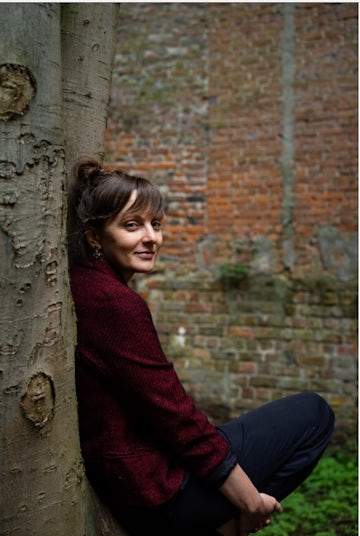
After the turn of the century, Gert Aertsen broke with his background as a classical trained painter to start exploring the possibilities of new media technologies for the use in installations and performances. Since 2001 he has been working as an artist, organizer, technician and programmer, and has collaborated with different organizations. He is a member of Machine Centred Humanz, a multi-disciplinary collective of artists exploring the different fields of technology, arts, robotics, and experimental music. He is one of the core members of Code31, an open studio for research, development and discussion about techniques and methodologies in media art. An initiative which stimulates interchange between several artistic disciplines and serves as the space needed to experiment with new technologies. And in 2004 he co-founded OKNO, an artist run organization based in Brussels.
cv

Exhibitions (selection)

2011

'Tender Buttons', Kunst-Zicht, Ghent (Belgium)

2006

'SE/30:Welcome to the 20th century back (code31)', recyclart, Brussels (Belgium)
'Trialer31 (code31)', 13m3, Bratislava (Slovak Republic)
'SE/30:Welcome to the 20th century back (code31)', OKNO, Brussels (Belgium)
'SE/30:Welcome to the 20th century back (code31)', STUK, Leuven (Belgium)
'Thoughts Go By Air (mxHz.org)', Le Mois Multi, Quebec (Canada)

2005

'Thoughts Go By Air (mxHz.org)', TESLA, Berlin (Germany)
'Thoughts Go By Air (mxHz.org)', CynetArt, Dresden (Germany)
'Le Placard (code31)', OKNO, Brussels (Belgium)


biblio

works


Thoughts go by air

Machine Cent'red Humanz [Chip Kali, Lahaag, and others]
helium, latex and electronics, hmmm (2005)"It should not be too difficult to build a species of independently flying creatures that communicate among each other, using human  energy and presence. Like Hitchcock's birds suggest: with their own systems of collective and collaborative intelligence driving on humans mobility as a source and interface." (mxHz.org, 2003)'Thoughts go by air' is a slowly evolving project within the domain of art and technology. The first generation (2003) existed of a bunch of balloons strapped together by wires and reacting on human or its own movements. For the second generation (2004), mxHz.org developed its own electronics with a sonar, motor control and communication protocols. This allowed the artbots to sense the environment and communicate with each other either in the same room or over the internet to another location. Connections between Brussels, Berlin, and New York were succesfully established. For the current third generation (2005), mxHz.org is trying to get one step further in establishing an autonomously flying flock with several identities and behaviors. The artbots form a connected but distributed swarm with sensors, motors and balloons. They react in a complex way to environmental conditions and changes, and add their unique sound to the chaotic world we humans have made, but always try to reduce to simplicity ...
"Of course due to the lack of wings on human bodies"  (Chip Kali) ...
"Machines that deal with people rather than people that deal with machines!" (Lahaag)


se/30:welcome to the 20th century back

At the origin: It must have been almost 10 years ago now. Ernst & Young wanted to get rid of their Mac's SE/30. Young Farmers Claim Future found ou and bought 20 of them including the ethernet cards, little microphones, mice and keyboards. At that time they were working with an early version of Max on Apple OS, the MIDI-only version. The good thing was that it included objects for serial communication and control of QuickTime instruments. Their plan was to create an audiovisual orchestra with the SE/30s. The major lines of behavior were to be implemented in a score on a nice big new computer which would update the 20 individual scores on each player/computer by ethernet connection. They never got started on the project ... due to Belgian cultural-political operations the commission was cancelled.Today's implementation: Code31 inherited the 20 SE's from Young Farmers Claim Future, and started to develop an installation based upon cellular automata. Cellular automata are algorithms based on the following principle: the state of a cell is a function of the states of neighbouring cells. A rule is chosen to determine this function. Since all cells are equal, if you choose a good rule, complex patterns emerge. Each SE/30 is a cell and adapts itself to it's neighbourhood, thereby forming patterns of collaboration ...Image and sound: The sound is modulated and the image is plotted by the state of the computer that's generating it. In the realm of General Midi and Quicktime Musical Instruments, aesthetics of error is a necessity. Digital artifacts render cellular phone-like- timbres into abstract textures. The heavy burden of the image, sound and communication processes,forces the computer to accelerate/decelerate analogous to the complexity of the current state, thereby creating a continuum - a kinetic paradigm - twisting hyperbolic structures to infinity, abruptly but effortlessly reclining to a newly attained quantum level, recursing into a neverending loop, with one sole, definite goal : a merciless kernel panic, driving this relic of a long gone age to the digital cemetery where it belongs ...


Gert Aertsen

º1975, Francisco Beltrão (BRA)
M: +32 496 50 62 23
E: info@lahaag.org
W: www.mxhz.org
W: code31.lahaag.org
Oppemstraat 70
1000 Brussel, België

categories

organisations (1 found)